
Healthcare Website Cleanup Case Study: Old-URL Detours Fell From 22 to 4
The audit logged 22 alerts for internal links that routed through old web addresses before reaching live pages. Sixteen days later it logged four. Here is why those detours, zero-inbound pages, and overlapping-copy alerts mattered, and what the audit can actually prove.

On This Page
Bottom line: A website audit finding is one alert from one page tripping one rule. It is not automatically a broken page or Google penalty. On this anonymized rehab site, old-URL link alerts fell from 22 to 4; those links still worked, but relied on redirects. Across the retained pages, 18 earlier internal-link alerts disappeared while two new structural warnings appeared, moving the comparable total from 53 to 37. The audit also stopped reporting three overlapping page pairs. This is a cleaner audit state, not proof of traffic, rankings, leads, or bookings.
Most internal-link reports make a website look busier than it is. They count every link, flag every redirect, and hand the practice owner a spreadsheet with enough rows to ruin an afternoon.
Then somebody recommends adding more links.
That was not the answer for this site. The first crawl counted 283 unique page-to-page link connections across 44 pages. A follow-up covered 43 pages after a leftover WordPress sample page was removed and still counted 283 connections.
The interesting change was not link volume. It was where those links went, which pages had no incoming internal link, and which alerts represented meaningful cleanup rather than measurement noise.
Comparing July 20 with August 5, 2026, the raw count fell from 55 to 37. Because two baseline findings belonged only to the sample page that was later removed, the like-for-like comparison is 53 to 37—a 30.2% reduction in 16 days, with no increase in the audit's total connection count.
What Is an Audit Finding, and Is It Actually Bad?
A finding is one alert raised when one page trips one audit rule. It does not mean 53 pages were broken, and it does not prove a Google penalty, lost rankings, or lost bookings. One page can create several alerts. The portal's critical, warning, and informational labels are priorities for review, not measurements of business harm.
The useful alerts in this audit fell into three very different groups:
- A link through an old URL: usually routine cleanup. The click still reached a live page because a redirect forwarded it, so this was a detour rather than a dead end. Direct links are easier to maintain and do not depend on an old redirect continuing to work. The raw count moved from 22 alerts to 4. One baseline alert belonged to the removed sample page; on 17 retained pages, the old-service redirect alert no longer appeared.
- A page with no incoming internal link: important only when the page is meant to be found. Often called an orphan page, this means no other crawled page linked to it. That can make useful content harder to discover while browsing, although a thank-you page may be intentionally unlinked. One sample-page alert disappeared with the page, and one retained condition page's zero-inbound alert was absent in the follow-up crawl. Two such alerts remained.
- An overlapping-copy alert: a reason to review, not an automatic penalty. The on-page crawler flags a pair when more than half of its normalized text overlaps. It writes one warning row for each page in the pair. Six rows disappeared here, representing three page pairs across four retained pages. The follow-up no longer reported those pairs; the stored audit does not prove what caused the change.
Across the retained pages, 18 earlier internal-link alerts disappeared: 17 old-URL alerts and one zero-inbound-page alert. Two new structural warnings also appeared. That leaves a net reduction of 16 alerts, from 53 to 37. It is a cleaner audit state, not 16 Google penalties removed.
What Changed After the Cleanup
Now the totals have context. This table separates working detours, zero-inbound pages, and overlapping-copy alerts instead of asking a severity score to explain the problem.
| What the audit counted | July 20 | August 5 | How to read it |
|---|---|---|---|
| Pages crawled (raw) | 44 | 43 | One sample page was removed |
| Unique page-to-page link connections | 283 | 283 | No change in the audit count |
| Links going through old URLs (raw) | 22 | 4 | Working detours, not dead links |
| Pages with no incoming internal link (raw) | 4 | 2 | Can be intentional; review page by page |
| Internal-link audit alerts on the same retained-page scope | 53 | 37 | 18 earlier alerts gone, 2 new warnings |
| Overlapping-copy warning rows on retained pages | 54 | 48 | Six rows represented three page pairs |
Scope note: The comparable 53-to-37 internal-link total excludes two baseline alerts tied only to the removed sample page. The overlapping-copy row comes from a separate on-page audit of the retained pages.
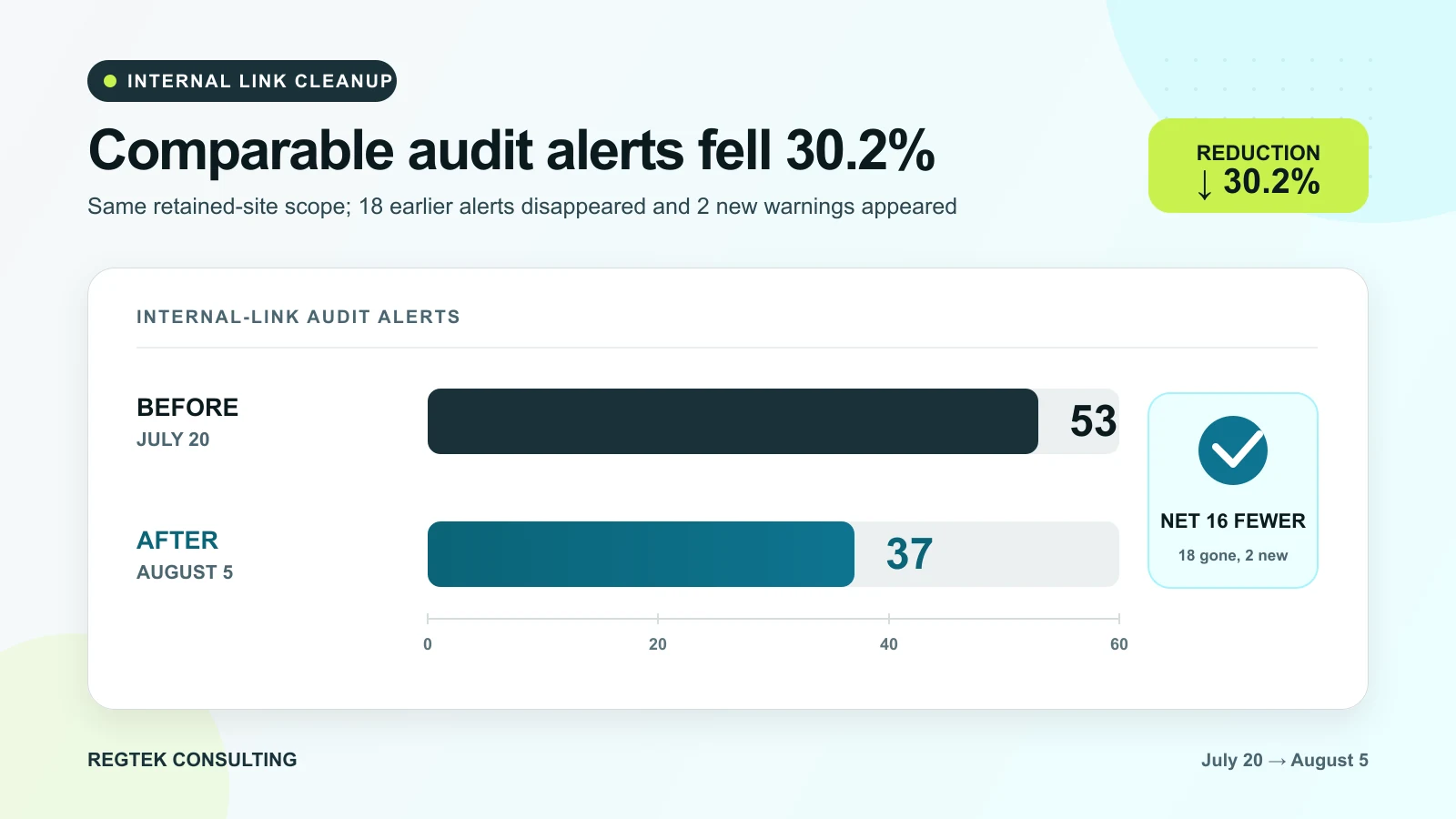
The comparable total is useful as a summary, but the category-level changes tell the real story. A lower audit count matters only when we can explain which alerts disappeared, which new ones appeared, and why.
I would rather report a net 16 fewer review items with a clear audit trail than imply that a software score proves business impact.
The Starting Point: Plenty of Links, Weak Routing
A connection count by itself tells you almost nothing. Two sites can each have 283 page-to-page connections and still have completely different structures.
One might guide visitors cleanly from symptoms to services, from services to provider information, and from educational content to an appointment path. The other might send people through old redirected URLs, leave valuable pages disconnected, and repeatedly connect pages that serve nearly the same purpose.
This rehab site was not a disaster. Most of the structure worked. That is exactly why the cleanup required judgment instead of a bulk "add internal links" button.
The audit separated three different problems:
- Links pointing to legacy URLs that redirected somewhere else
- Pages with no meaningful internal path leading to them
- Retained pages carrying on-page findings, including duplicate-content issues
Those problems can sit next to each other in a dashboard, but they do not have the same fix.
Links Through Old URLs Fell From 22 to 4
The biggest visible change was in old-URL link alerts. The raw count fell from 22 to 4.
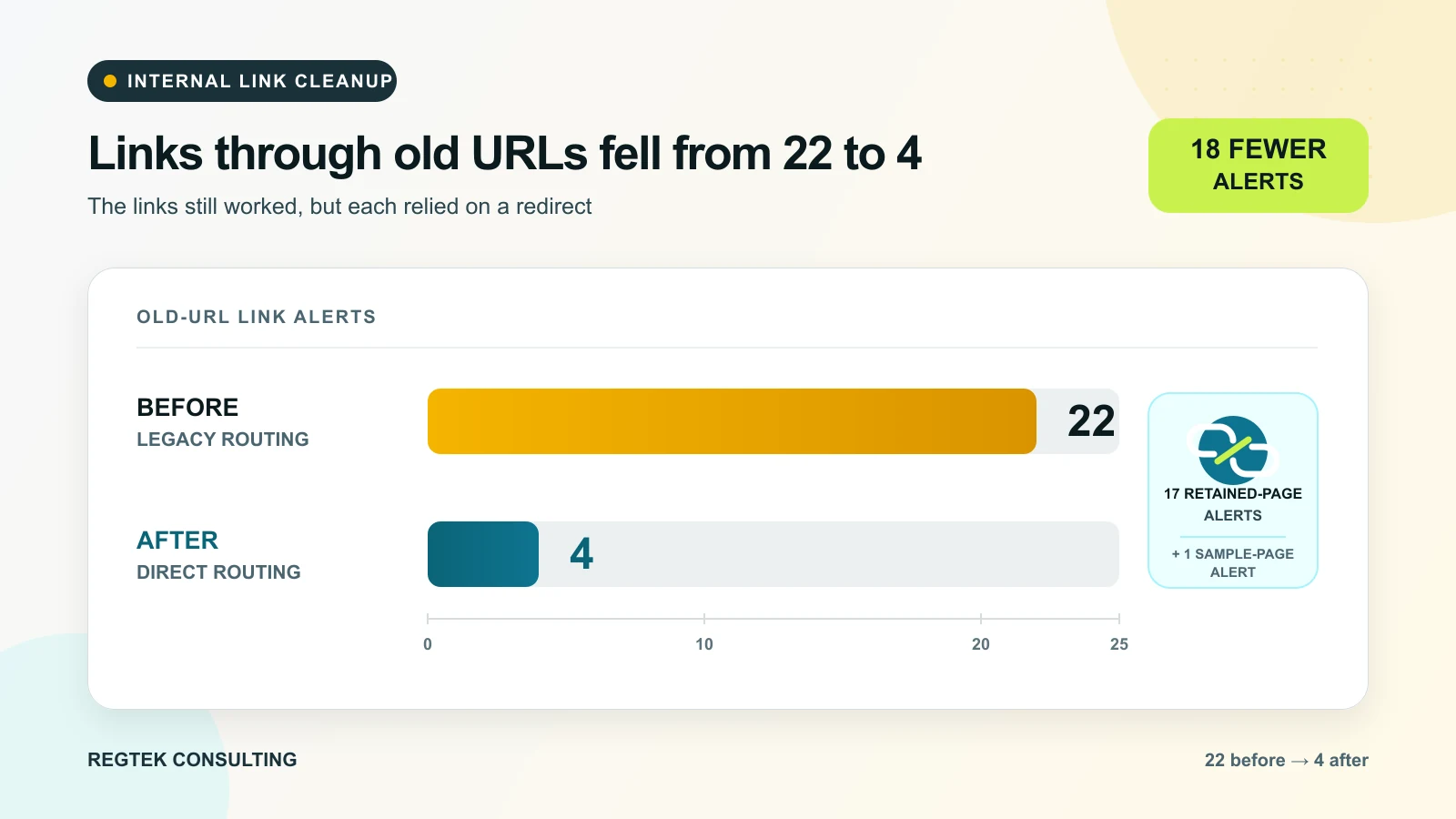
The old-service redirect alert no longer appeared on 17 retained pages. The removed sample page accounted for one additional baseline redirect alert. The audit proves those 18 warning rows disappeared; it does not show whether every source link was replaced, removed, or changed another way.
A redirected internal link is not automatically broken. A visitor may click it and still reach the final page. That is why these warnings often sit untouched for years: the site appears to work, so nobody feels urgency.
But an internal link should normally point directly to the current destination. Sending visitors through an old URL adds an unnecessary step and makes the website harder to maintain. It also leaves the practice dependent on a redirect rule that somebody has to remember during the next redesign or platform change.
The follow-up audit counted the same number of page-to-page connections but far fewer alerts for links routed through old addresses.
Two Zero-Inbound Alerts Disappeared for Different Reasons
Zero-inbound page alerts fell from 4 to 2. That sounds simple until you look at what actually changed.
One finding disappeared because the sample page was removed. That is legitimate cleanup, but it did not improve the discoverability of a useful page. The page no longer existed, so it no longer needed a link.
The other disappearance involved a retained condition page. Its zero-inbound alert was absent from the follow-up crawl, so the audit no longer classified it as a page with no incoming internal link. The stored audit does not identify the exact link change.
Those are two different outcomes:
- Removing irrelevant content makes the site inventory cleaner.
- Connecting a retained page makes that page reachable through the site's normal structure.
Both reduce the raw audit count. Only the retained-page change could indicate improved discoverability; the audit alone cannot show exactly how that page became reachable.
This distinction is easy to lose in a polished report. A dashboard might show "orphans down 50%" and stop there. A useful review asks whether the team repaired valuable content or simply reduced the number of pages being measured.
Three Overlapping Page Pairs Were No Longer Flagged
A separate on-page audit provided a useful secondary check. The raw total moved from 120 findings to 111. The removed sample page accounted for three baseline findings, so the comparable retained-page count was 117 to 111, a 5.1% reduction.
The retained-page count fell from 117 to 111 because six duplicate-copy warning rows were no longer present. Since the scanner records both pages in each similar pair, those six rows represented three page pairs across four retained pages. The follow-up no longer reported those pairs; this audit does not prove what changed between the pages.
Duplicate content on a practice website is not always deliberate. It often accumulates through copied service descriptions, old campaign pages, sample content, or two pages written for nearly identical topics.
If two pages serve the same purpose, the team still has to decide which page should receive internal links, which one should be updated, and which one should appear in navigation. Leaving both in place without a clear reason makes every future content decision harder.
What This Case Study Does Not Prove
This is where marketing case studies often get carried away, so let me be direct.
This audit does not prove that Regtek caused every observed change. Before publishing this as a named client result, we would confirm the deployment record and obtain client permission. That is why the practice remains anonymized here.
We are also not claiming that the cleanup increased traffic, improved rankings, generated leads, or booked more patients. The 16-day window is enough to confirm a cleaner audit state. It is not enough to isolate organic-search or business outcomes.
The result we can verify is narrower:
- The first crawl covered 44 pages; the follow-up covered 43 after a sample page was removed.
- The audit counted the same 283 unique page-to-page link connections.
- Across the same retained-page scope, 18 earlier alerts disappeared and two new warnings appeared, moving the total from 53 to 37.
- The largest improvement came from redirected legacy links.
- One retained page stopped being orphaned.
- Six duplicate-copy warning rows, representing three page pairs across four retained pages, were no longer reported.
There were still 37 internal-link alerts after the cleanup. Some were informational or intentional review items. Zero should not be the goal if reaching it means deleting useful pages or adding pointless links.
The goal is a structure that makes sense to visitors, staff, and the people responsible for maintaining the site.
Why This Matters for a Rehab Practice
Rehab websites change constantly. Providers join or leave. Locations move. Service names evolve. A condition program gets expanded, a sample landing page gets forgotten, or an old URL survives three redesigns because the redirect still works.
Internal linking is the routing system underneath all of that content.
I think about it the same way a practice owner thinks about patient flow. Having hundreds of signs does not help if some point through old hallways and useful rooms have no sign leading to them. Adding another stack of signs is not the fix. Correcting the routes is.
If your website has been rebuilt, migrated, or expanded over several years, this is exactly the kind of review we handle.
A Practical Internal Link Cleanup Checklist
You do not need a complicated platform to start. You need a consistent crawl, a clear baseline, and enough discipline to check what each finding actually means.
- Crawl the full site and freeze the baseline. Record the page count, unique page-to-page connections, old-URL alerts, zero-inbound pages, and on-page issues before changing anything.
- Make the before-and-after comparison fair. Compare the same pages and rules in both audits. Exclude deleted pages from retained-page comparisons, but document why they disappeared.
- Review redirected internal links first. Confirm the redirect is intentional, identify the final destination, and update the source link when a direct path is available.
- Separate broken pages from legacy paths. A page returning an error is not the same as a working redirect. They need different priorities and different fixes.
- Inspect every page with no incoming internal link. Decide whether the page should be retained, connected, consolidated, or removed. Do not add a random footer link just to clear the warning.
- Give retained pages a contextual path. Link from a relevant service, condition, provider, or resource page where the connection helps a real visitor.
- Investigate duplicate content before merging anything. Determine whether the pages serve different audiences or locations. If they do not, choose a primary page and clean up the overlap deliberately.
- Recrawl using the original scope. Verify the improvement against the same baseline instead of celebrating a smaller total caused by a different crawl.
- Document what remains. Some findings are low priority or intentional. Record the decision so the next audit does not restart the same argument.
The Bottom Line
This rehab site did not need more internal links. It needed cleaner ones.
Between July 20 and August 5, the audit still counted 283 unique page-to-page connections. Old-URL alerts fell from 22 to 4. One sample page disappeared, and one retained condition page no longer triggered the zero-inbound rule. In the separate on-page audit, six duplicate-copy warning rows, representing three page pairs, were no longer reported. Across the comparable internal-link scope, 18 earlier alerts disappeared while two new warnings appeared, moving the total from 53 to 37.
That is not a traffic claim. It is a cleaner website structure, measured honestly.
If your internal-link report is hundreds of rows long and nobody can tell you which findings matter, I am happy to take a look and give you a practical order of operations.
Ready to see results for your practice?
30-minute strategy call. Direct access to Kevin Dillon, an operator who's scaled healthcare businesses to Inc 5000. No account managers, no pitch deck, just answers.
Book a Free ConsultationMore Tips & Tricks

Healthcare Marketing Audit: Where Your Budget Goes
Paying for SEO, ads, and three subscriptions nobody remembers? Here is the exact step-by-step process to trace every marketing dollar from your bank account to a booked patient.

7 Conversion Killers on Healthcare Websites
Most medical practices invest in building a website but overlook the details that actually turn visitors into patients. Understanding why healthcare websites lose visitors is the first step toward fixing the problem. At…
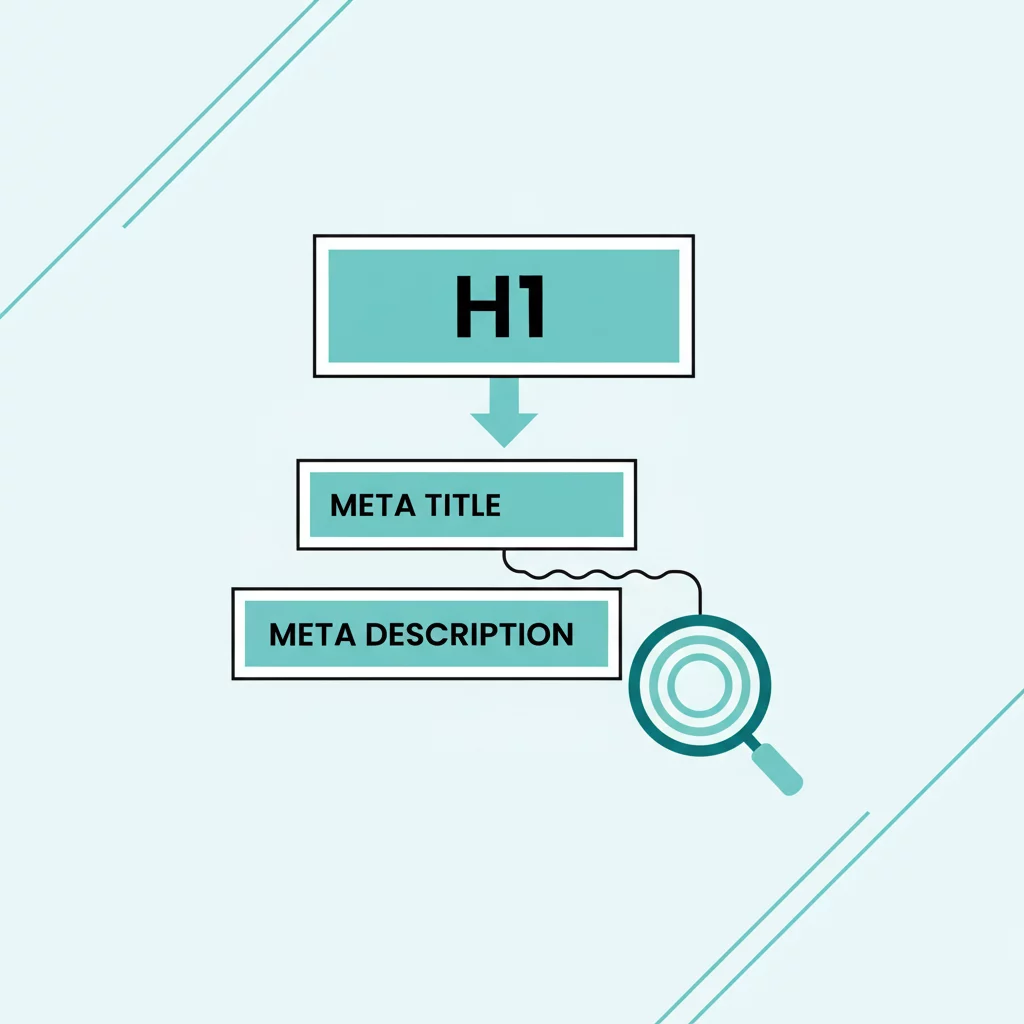
SEO Strategy Basics: How H1 Tags, Meta Titles, and Meta Descriptions Actually Drive Patient Traffic
Here’s something that drives me crazy. A healthcare practice spends $3,000 a month on SEO, and when I pull up their site, every single page has the same meta title: “Home | [Practice Name].” Their H1 tag says “Welcome…